Diving at the edge of the world: Exploring wild Tasmania
Text & Photos by ELODIE CAMPRASSE
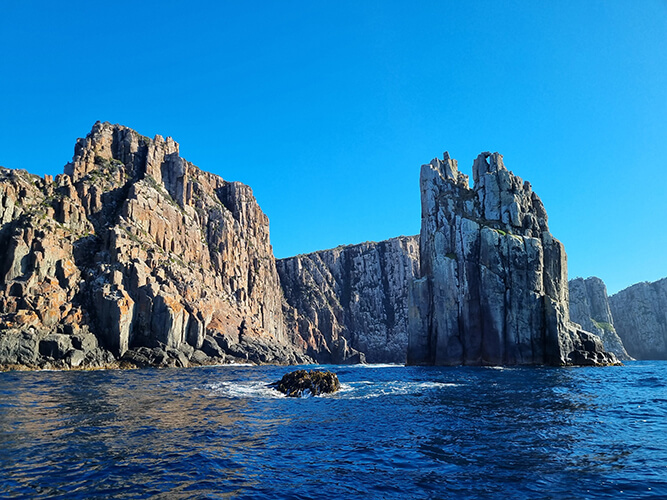
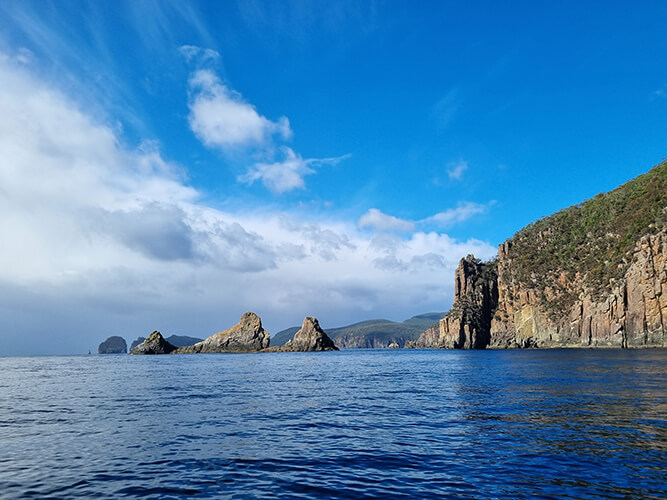
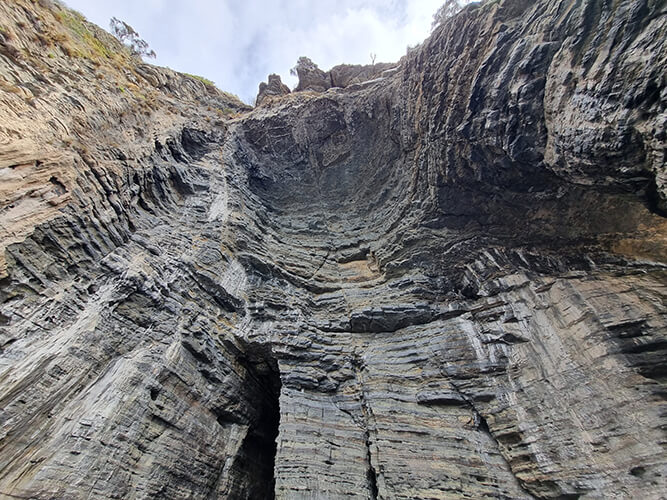
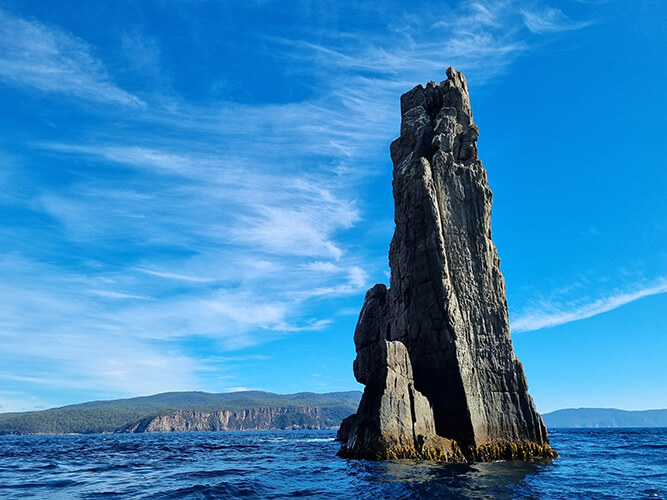
Some coastlines feel wild; the Tasman Peninsula feels truly untamed — an edge-of-the-world frontier where cliffs plunge straight into the Southern Ocean. For ocean enthusiasts, it offers a rare mix of sheer dolerite cliffs, abundant marine life, and underwater landscapes that look almost otherworldly. This is a coastline shaped by wind, swell, and ancient volcanic forces, and in March 2025 I was finally able to explore the hidden world beneath its surface — a long-anticipated bucket-list destination that revealed exactly why Tasmania is becoming one of the world’s standout cold-water adventure locations.
Tasmania may be only the size of West Virginia, but its coastline feels far larger thanks to its dramatic mix of headlands, sea stacks, deep bays, and steep underwater ridges. The Tasman Peninsula captures this rugged character perfectly. For boaters and divers, it offers a landscape where sheltered coves sit just around the corner from fully exposed Southern Ocean energy.
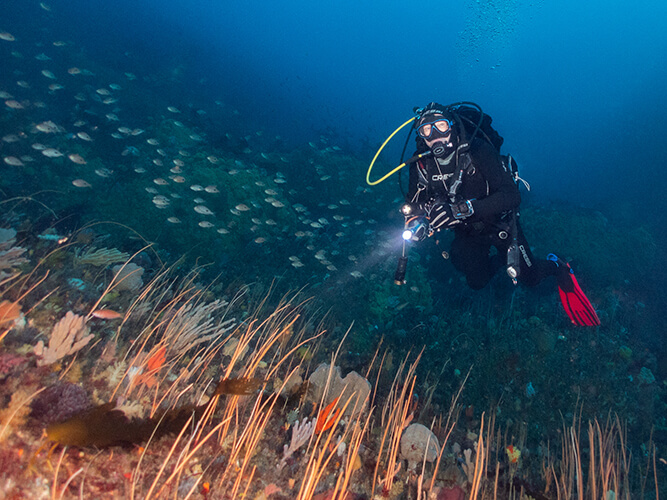
The dive sites alone hint at the terrain. Places like the Trident, the Monument, the Cathedral, the Hippolytes, the Needle, and a newly explored region known as the Fields practically beg to be visited. Most lie deep — often well beyond 100 feet — and are typically reached by inflatable dive boats launched from Pirates Bay near Eaglehawk Neck or from Port Arthur, farther south.
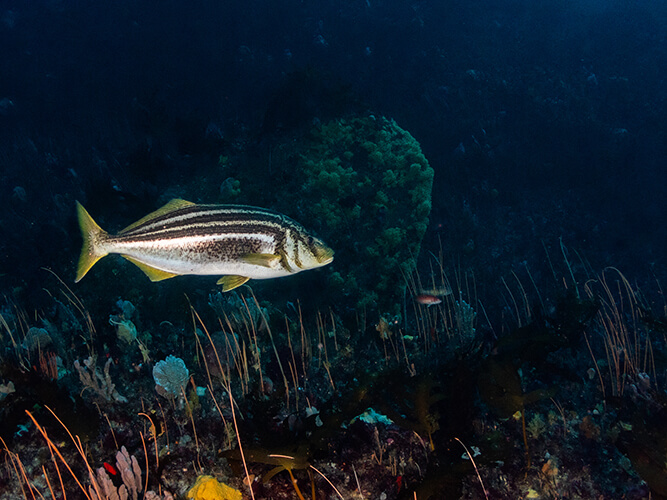
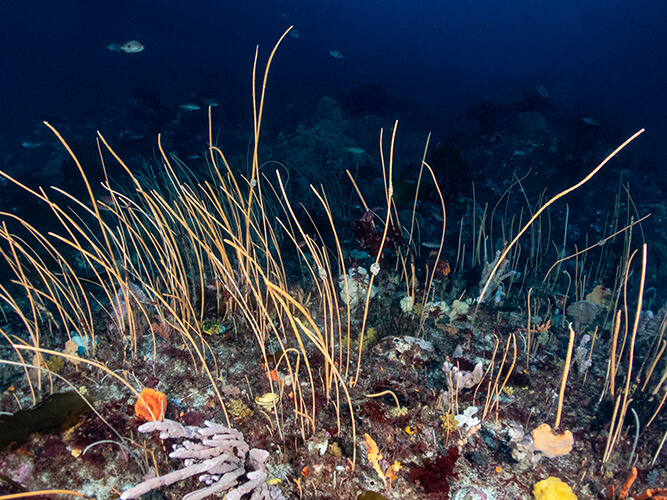
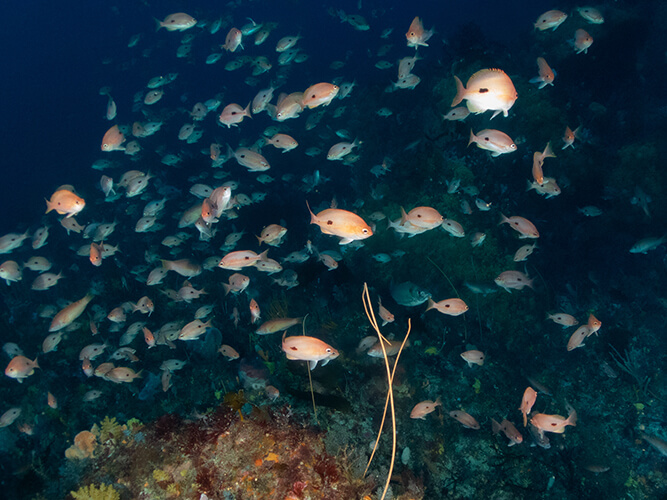
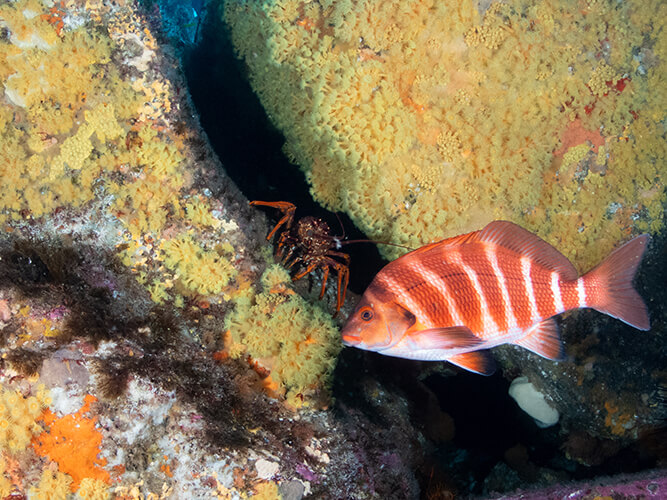
The marine life here feels distinctly Tasmanian. We encountered elegant schools of trumpeters, one of the region’s signature species, along with tarakihi, banded morwongs, marblefish, swell sharks, and several species of brilliantly colored sea perch. For those willing to slow down and scan the reef, the finer details emerged: delicate basket stars perched on long whips, bright yellow zoanthids clustered like underwater sunbursts, and Māori octopuses patrolling the reef, ready to strike at passing prey.
Despite its latitude, Tasmania’s marine palette is surprisingly vibrant. Soft corals, sponges, and anemones painted the deep walls in shades of red, pink, gold, and orange.
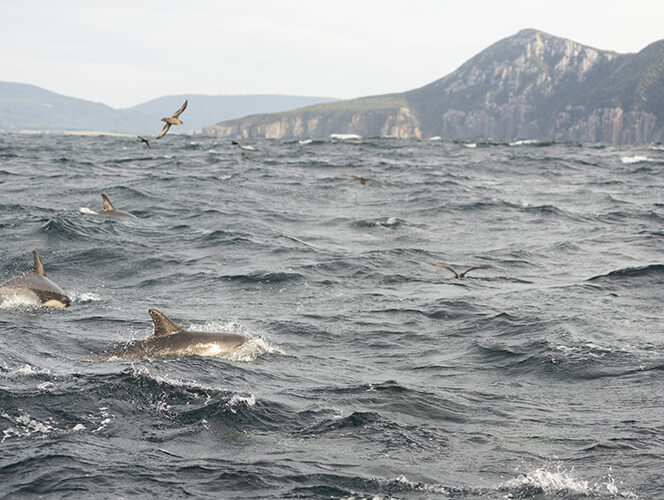
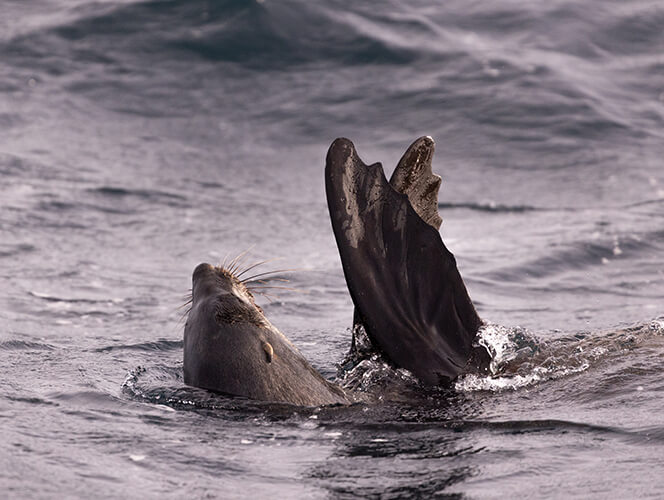
The wildlife above the surface was just as compelling. Shearwaters and albatross traced effortless arcs overhead — birds usually rarely seen by boaters elsewhere unless far offshore. Sea eagles patrolled the coastal cliffs. Pods of common dolphins raced alongside our bow wake, and more than once we idled the engines to watch fur seals feeding frenetically around baitballs.
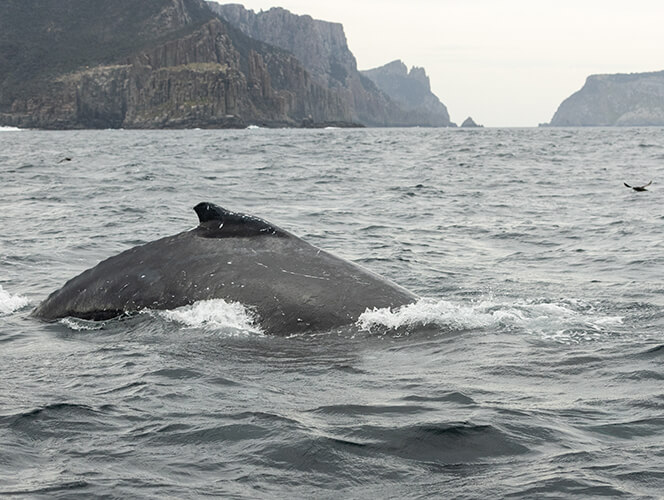
Twice during the week, humpback whales surfaced nearby, their rhythmic exhalations echoing across the water and reinforcing the Southern Ocean’s immense, wild presence.
After days of dramatic deep-water dives, I ended the trip with a very different kind of adventure: searching for the endangered spotted handfish in the shallow waters of the Derwent River, which winds through Hobart. This unusual species — found only in a few sheltered Tasmanian estuaries — “walks” across the bottom using fins shaped like tiny hands.
The water was cool and murky, the breeze brisk, and visibility low, but patience paid off. One small handfish appeared on the silty bottom, turning a simple shoreline search into one of the week’s most memorable moments.
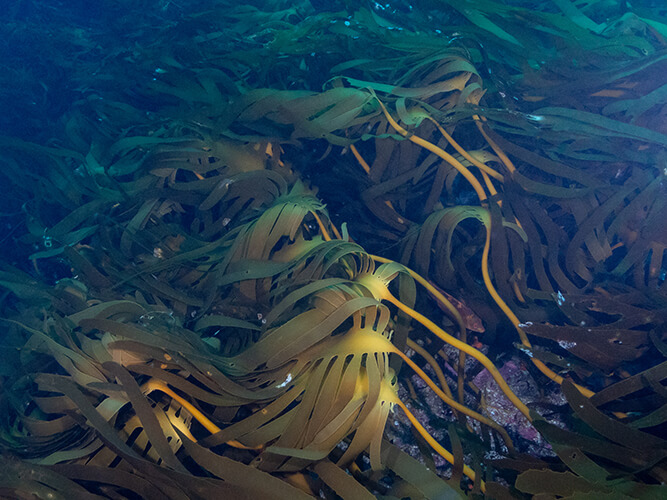
Remote yet accessible, rugged yet full of life, the Tasman Peninsula offers boaters and divers a glimpse of one of the planet’s most pristine marine environments. Whether you’re cruising beneath towering cliffs, drifting beneath wheeling seabirds, watching whales on the horizon, or descending into forests of kelp and coral, Tasmania delivers the kind of adventure that stays with you long after you hae left its shores.
For anyone seeking a truly wild, world-class ocean journey, this edge-of-the-world coastline deserves a place near the top of the list.