Exploring North Sulawesi’s three underwater worlds
Text & Photos by | Texto y Fotos por ELODIE CAMPRASSE
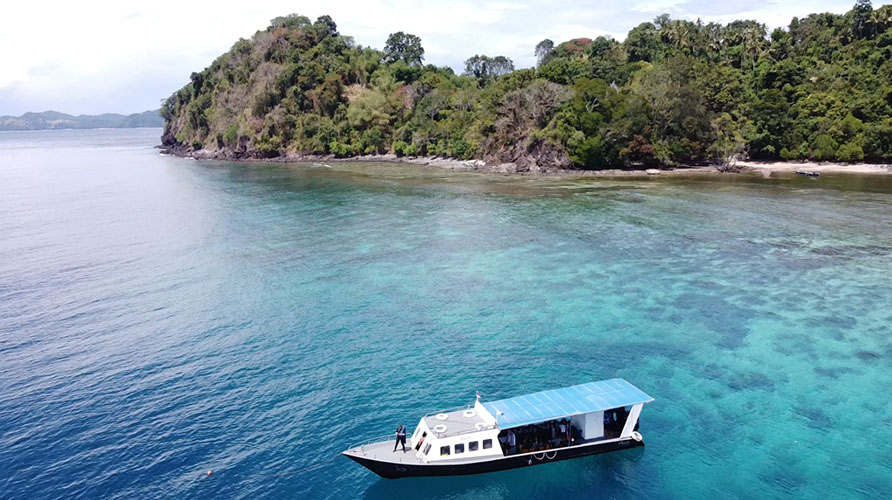
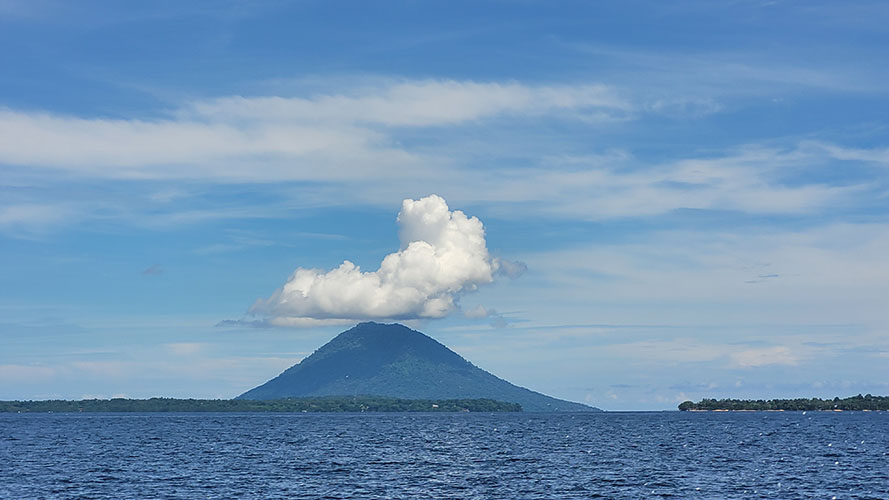
Approaching North Sulawesi by boat, the first thing you notice is the skyline. Volcanic peaks rise sharply from the sea, often capped in clouds, their slopes tumbling toward jungle-fringed shores. The coastline is shaped by lava above the waterline and, as it turns out, just as dramatically below it.
When a friend from my dive club suggested a trip to North Sulawesi, promising world-class diving and remarkable biodiversity, I signed up expecting something special. What I didn’t expect was how thoroughly the region would exceed those expectations.
Perched at the northern tip of Indonesia, North Sulawesi sits in the heart of the Coral Triangle — the most biodiverse marine region on the planet, spanning Indonesia, the Philippines, Malaysia, Papua New Guinea, the Solomon Islands and Timor-Leste. More than 1,300 species of fish and a few hundred species of hard and soft corals inhabit these waters. For boaters, snorkellers and divers alike, it’s a destination defined by abundance.
One of the great pleasures of diving or snorkelling there is how much variety can be experienced in just a few days. The region’s three different underwater worlds — Bunaken, Bangka and Lembeh — lie within relatively easy reach of one another, each offering contrasting adventures.
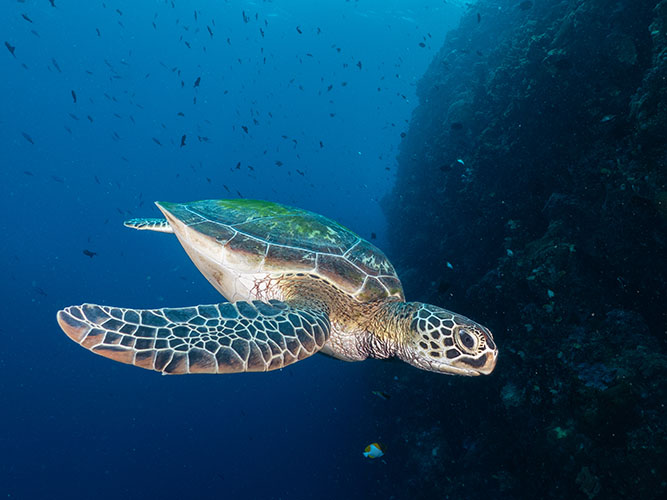
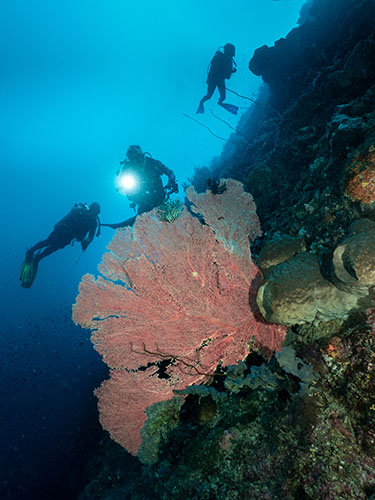
Bunaken National Park delivers a grand, cinematic experience. One of Indonesia’s earliest marine protected areas, it has benefited from decades of conservation, and marine life flourishes as a result. In Bunaken, you’ll find coral walls that plunge hundreds of feet into clear blue water. Dropping in beside them feels like descending along a living cliff face. Dense coral growth, broad sea fans and towering sponges give the wall depth and texture, while green, and occasionally hawksbill, turtles cruise past. On many dives, we encountered several turtles, sometimes close enough to study the intricate patterns on their shells. Visibility was superb, the water warm, and the experience consistently impressive.
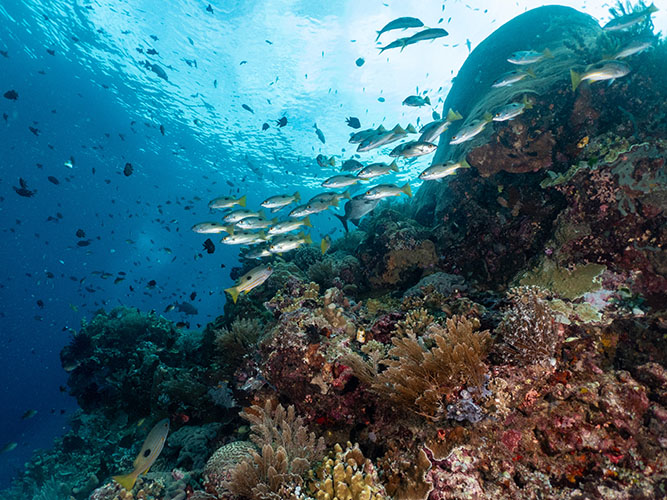
A couple of hours away by boat lies Bangka Island, where volcanic activity has shaped the seascape above and below the surface. Underwater pinnacles rise from the seafloor, and sloping reefs reward divers and snorkelers with soft corals and their hues of electric oranges, purples and pinks. Schools of fusiliers, snappers, rainbow runners and mackerels gather in the blue. Lucky visitors might even glimpse a dugong — a shy relative of the manatee — passing through these waters.
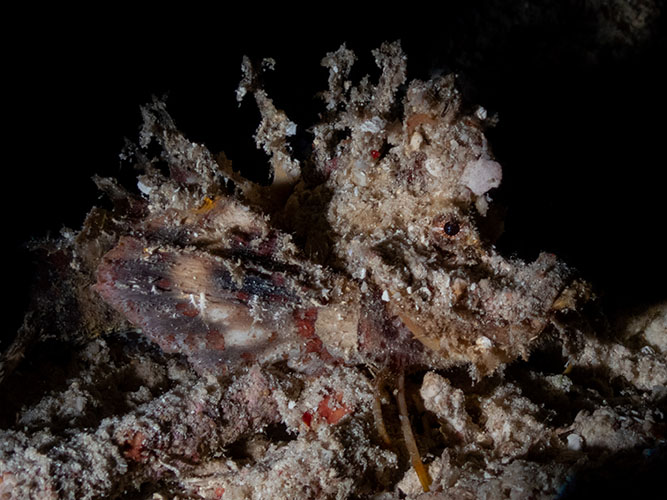
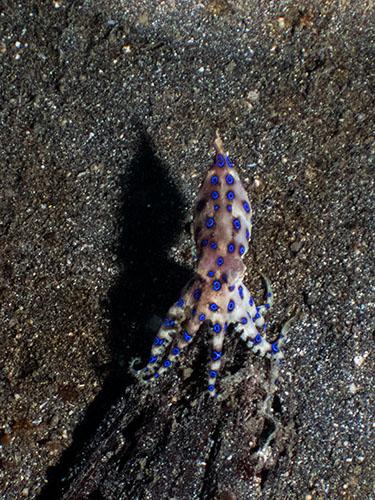
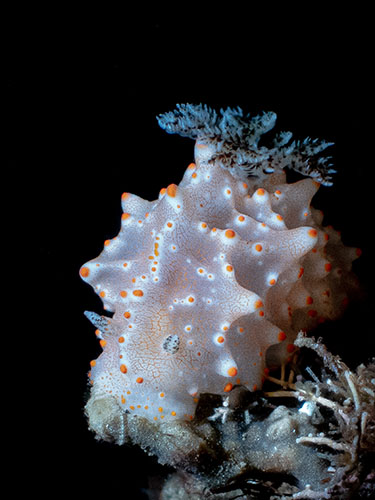
A few hours south of Bangka, Lembeh Strait — often referred to as the “Critter Capital of the World” — offers something entirely different. The strait’s sheltered conditions and dark volcanic sand slopes make it a haven for macro life. Lembeh is widely regarded as one of the world’s premier muck diving destinations. Muck diving focuses on searching for cryptic and unusual marine life in soft-bottom habitats such as sand or silt rather than on coral reefs. At first glance, the seabed can appear unremarkable. But this is where local guides, with years of experience and remarkable knowledge of behavior and camouflage strategies of local species, turn a patch of sand into a sequence of unexpected discoveries. At the end of the dive guides’ pointers, mimic octopus, flamboyant cuttlefish, rhinopias, wonderpus, blue-ringed octopus and frogfish appear in improbable succession.
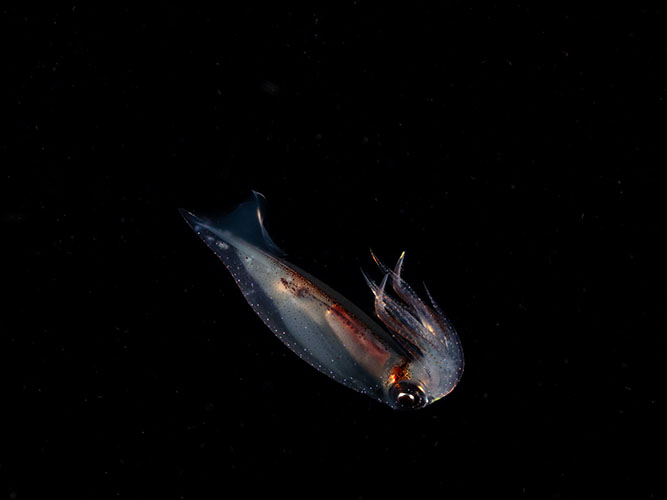
As memorable as these reefs are during the day, the underwater world shifts again after sunset. Many resorts offer easy access to house reefs that take on an entirely different character at night, with new species emerging and distinct behaviors on display. For the more adventurous, blackwater diving offers yet another perspective of the underwater world after dark. Drifting over deep water at night and watching bizarre larval, and occasionally adult, pelagic creatures rise toward lights suspended beneath the boat adds another dimension to the experience, offering encounters few divers ever witness.
For anyone drawn to life on the water and eager to explore somewhere new, North Sulawesi offers an uncommon concentration of experiences in one compact cruising ground, both above and below the surface.